
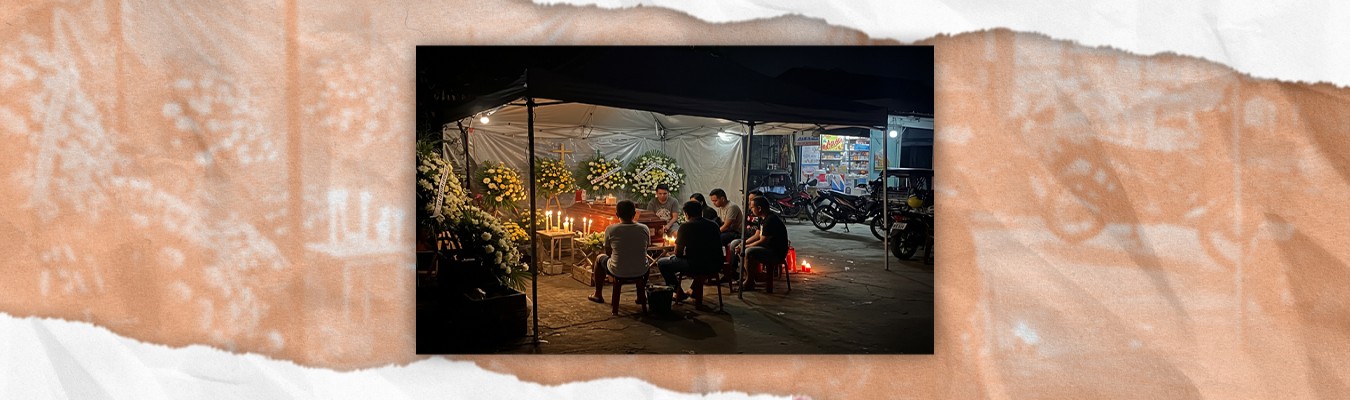
Everything comes with a cost, even grief, unfortunately.
In the Philippines, things come with a little bit of spectacle, from birthdays to barangay pageants; our country never goes out of style. Sadly, even in times of grief, Filipinos keep our own signature of “hospitality.”
We call it culture, but it is time we stop glorifying a cycle that puts grieving families to the test.
There is nothing wrong with showing courtesy to guests, especially at a time when we gladly accept them inside our homes. It is a long-standing tradition in our nation. A simple Coke and pandesal is not amiss; plus, if you are generous, pancit in any style is a safe choice.
But should Filipinos’ generosity come at the expense of families who are already struggling with the loss of a loved one?
A lamay is meant to be a time of mourning, remembrance, and solidarity. It is when relatives, friends, and neighbors gather to offer condolences, share stories, and accompany the bereaved through one of the most difficult moments of their lives. Yet, somewhere along the way, the focus can shift from comforting the grieving to feeding the guests.
Suddenly, there is an unspoken expectation to prepare food, refill the coffee, and make sure no visitor leaves with an empty stomach. The family is already dealing with funeral expenses, emotional exhaustion, and the painful reality of losing someone dear. Must they also worry about whether there is enough food on the table?
To be fair, food has always played a role in Filipino gatherings. Sharing a meal is one way we express care, and providing refreshments during a wake can be a thoughtful gesture. But there is a difference between offering food out of kindness and feeling obligated to host a feast because tradition says so. The former comes from the heart; the latter can become a financial and emotional burden.
Worse, when these expectations go unquestioned, families may feel pressured to spend money they do not have just to avoid judgment. What if there is no pancit? What if there is only coffee and water? Would that make their grief any less deserving of sympathy? Would a family’s inability to serve a proper meal make them any less hospitable?
Of course not.
We need to stop measuring hospitality by the amount of food served, especially when the occasion calls for compassion rather than celebration. No grieving family should feel that they must prove their generosity while trying to cope with their loss.
If we truly wish to honor Filipino values, then perhaps we should begin with pakikiramay—the act of sharing another person’s sorrow. It means showing up, offering a comforting word, helping with arrangements, or simply sitting beside someone who does not feel like talking. Sometimes, the most meaningful thing we can bring to a wake is not a container of food but a willingness to help carry the weight of grief.
And if we insist on bringing food, let it be a gesture of support rather than an expectation placed upon the bereaved. Neighbors and relatives can contribute meals, share expenses, or help with preparations so that the family does not have to shoulder everything alone. Hospitality, after all, should be a shared responsibility, not a performance demanded of those who are hurting.
Traditions are meant to bring people together, not make difficult circumstances even harder. We can preserve the warmth of Filipino hospitality without preserving every expectation that comes with it. Culture is not weakened when we reconsider a practice; it grows when we learn to make room for compassion and changing circumstances.
At the end of the day, people will not remember a wake solely for the food that was served. They will remember the people who came, the stories that were shared, and the comfort they received when words were not enough.
Perhaps it is time we rethink the handa during lamay. Let us leave behind the pressure to prepare a feast.
Grief is already expensive enough. The least we can do is make sure that the people mourning a loss do not have to pay an additional price just to meet our expectations.
Related Reads
What's New
More Articles