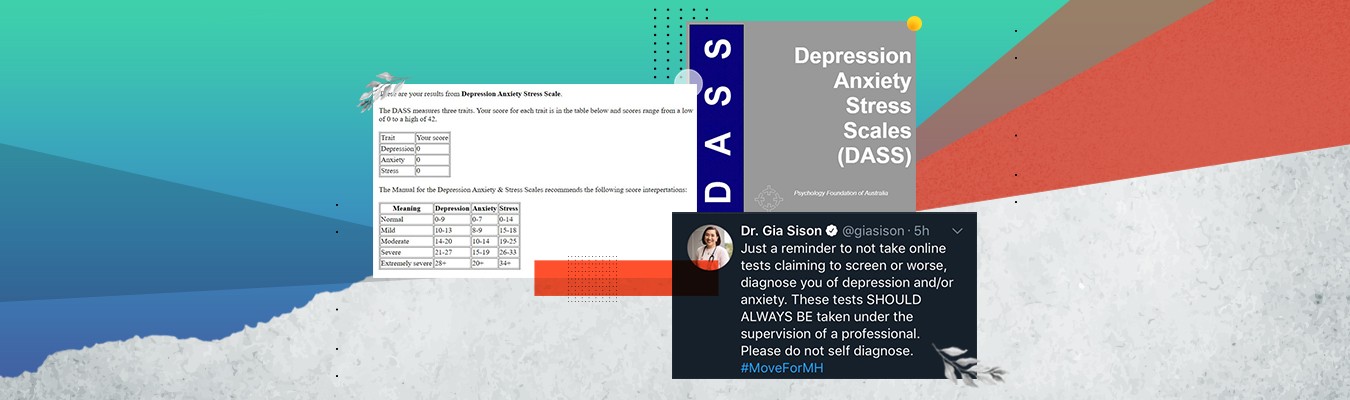
It looks like our social media feeds are beginning to fill with psychology test-like results these days.
A survey-like link which currently rounding up on screens is a test to measure the level of our mental health focusing on the three traits of depression, anxiety, and stress known as ‘Depression Anxiety Stress Scales’ or DASS.
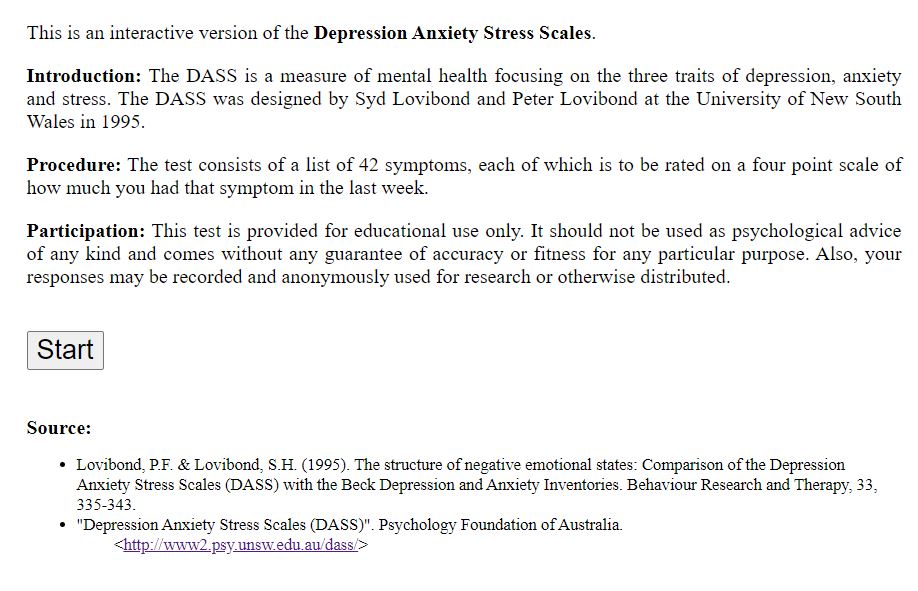
DASS is a self-report instrument developed by psychologists and professors Syd Lovibond and Peter Lovibond at the University of New South Wales in 1995.
The questionnaire is in the public domain and may be downloaded from this website, but the manual which contains more detailed information about the DASS can be ordered for a nominal fee of $55.00.
THE PROCESS
In an overview of the DASS and its uses published on the official website of the University of New South Wales, School of Psychology, it says that each of the three DASS scales contains 14 items, divided into subscales of 2-5 items with similar content.
On the site, it categorically describes each of the negative emotions with its related traits or feelings. For the ‘Depression scale’, it assesses dysphoria, hopelessness, devaluation of life, self-deprecation, lack of interest/involvement, anhedonia, and inertia.
The ‘Anxiety scale’ assesses autonomic arousal, skeletal muscle effects, situational anxiety, and subjective experience of anxious affect.
And for the ‘Stress scale’, it is sensitive to levels of chronic non-specific arousal. It assesses difficulty relaxing, nervous arousal, and being easily upset/agitated, irritable/over-reactive, and impatient.
It is said that subjects are asked to use 4-point severity/frequency scales to rate the extent to which they have experienced each state. Scores for Depression, Anxiety, and Stress are calculated by summing the scores for the relevant items.
THE RESULTS
Responses from participants are recorded and anonymously used for research or otherwise distributed.
On the DASS frequently asked questions section published on the official website of University of New South Wales, School of Psychology, it says that there are no special skills required needed in administering the DASS, but, interpretation of its results should be carried out by individuals with appropriate training in psychological science, including emotion, psychopathology, and assessment.
When the DASS is administered to individuals who have sought professional help, or who are displaying high levels of distress, interpretation should be carried out by an appropriately qualified health professional such as a clinical psychologist.
Here’s the link if you willingly want to try it with your own risk: https://openpsychometrics.org/tests/DASS/
Children below 14 years old are not recommended to conduct the DASS because it is likely that some children would not fully understand all of the terms used.
If you have a query about any other aspect of the DASS, you may send an email to the creator himself Prof. Peter Lovibond at p.lovibond@unsw.edu.au
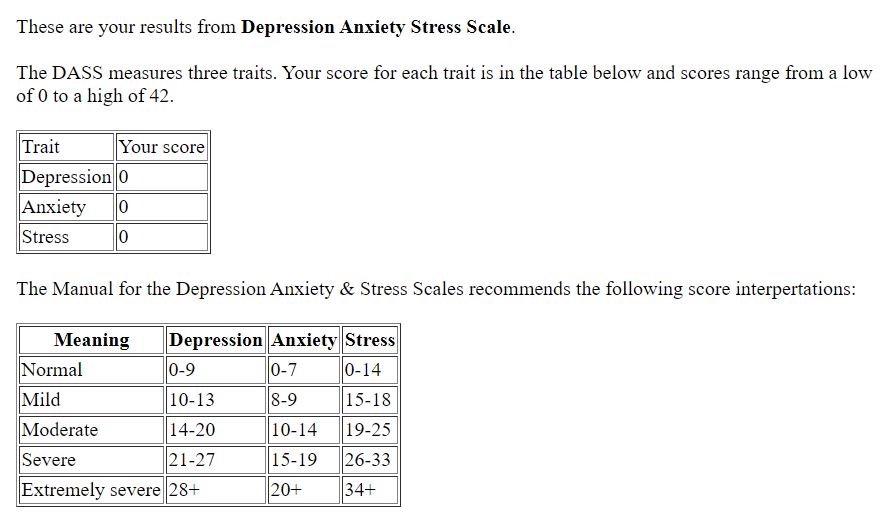
The interactive version of DASS that consists of a list of 42 symptoms and can be rated with a four-point scale is provided for educational use only and it should not be used as psychological advice of any kind and comes without any guarantee of accuracy or fitness for any particular purpose.
The overwhelming response of Pinoy netizens to the now-viral online psychological test has brought a huge alarm to some Filipino psychologists who highly discourage to take it.
See posts below:
On her social media accounts, known Occupational Medicine specialist and blogger Dr. Gia Sison reminded everyone not to take the test.
She reiterated that these types of tests SHOULD ALWAYS BE taken under the supervision of a professional.
The Facebook page “I-Psych Mo Nga Ako” also posted the same sentiment and told everyone not to base mental health levels from the numbers on the scale, instead, they should seek only licensed Mental Health Practitioners with adequate training and experience for clinical impression.
“Never self-medicate because you may put your life at risk instead of getting better,” the post reads.
Yes, do not self-medicate!
There’s nothing wrong if you seek help. Always remember that you guys are not alone!
Related Reads
What's New
More Articles