
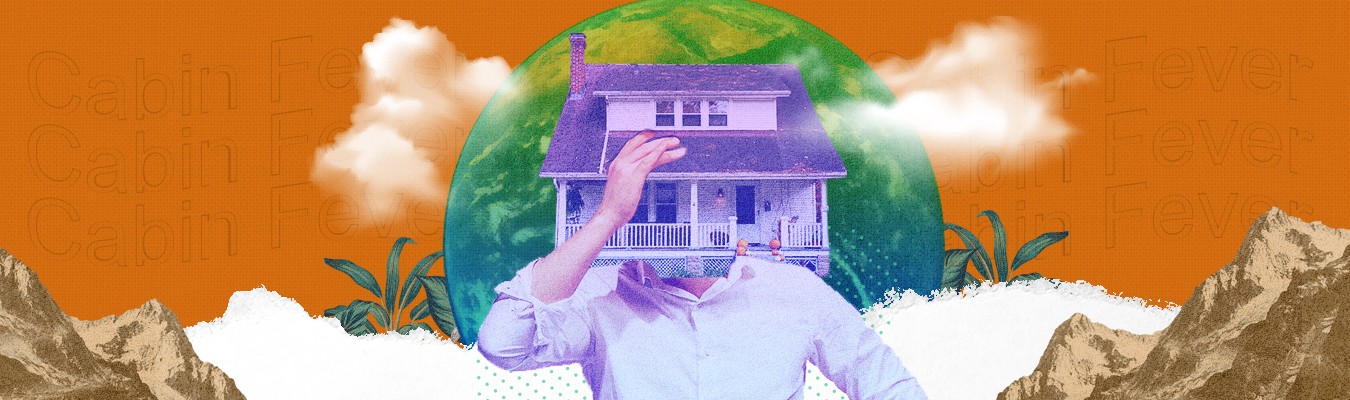
Have you ever heard the term ‘Cabin fever’? the feeling of being isolated in a certain place for a long period of time.
Not a psychological disorder but more of a problem about feelings whenever someone feels stuck or disconnected from the outside world.

WHAT IS CABIN FEVER?
According to the health section of CNN website written by Kristen Rogers on March 19, 2020, The origin of the term is a bit murky, but it probably dates back to the early 1900s in North America, when it may have referred to someone who was isolated in a remote area, or cabin, especially during the winter when it was necessary to stay indoors for days at a time. Another explanation traces further back to the early 1800s when the phrase might have referred to being homebound with typhus fever.
Cabin fever is a series of negative emotions and distressing sensations people may face if they’re isolated or feeling cut off from the world as defined by the Healthline website.
Today, it is prevalent amongst people who are unstable in terms of mentally but also this may be due to a variety of circumstances, such as a natural disaster, lack of transportation, or even social distancing for pandemics like COVID-19.
SYMPTOMS
In an article written by the Healthline website editorial team and medically reviewed by Debra Rose Wilson, PhD, MSN, RN, IBCLC, AHN-BC, CHT on April 2, 2020, symptoms are rooted from intense feelings and may include the following.
- restlessness
- decreased motivation
- irritability
- hopelessness
- difficulty concentrating
- irregular sleep patterns, including sleepiness or sleeplessness
- difficulty waking up
- lethargy
- distrust of people around you
- lack of patience
- persistent sadness or depression

HOW TO COPE UP WITH CABIN FEVER
Based on the article, the coping mechanism starts within you. You should work the best for you, finding meaningful ways to engage your brain and occupy your time can help alleviate the distress and irritability that cabin fever brings.
The Healthline website recommends the following steps and measure to cope up with cabin fever:
Spend time outdoors
You should spend time on nature. Research shows that is really good for mental health.
Give yourself a routine
To keep a sense of structure, try to create a daily routine that consists of work or house projects, mealtimes, workout time, and even downtime.
Maintain a social life
Don’t lose your social life to beat cabin fever. Utilize different social media platforms and applications to connect with your loved ones and pals, this might give you another sense of feeling but may strengthen your views toward your social connection

Express your creative side
Spending time on creative activities to keep your brain busy. This is a perfect time to go back to the hobbies you used to do before. You must keep your mind occupied and engaged to divert your attention and make the time pass more quickly.
Carve out some ‘me time’
Give yourself a deserved ‘me-time.’ You should go on self-reflection and assessment to discover things about yourself that might lead you to improvement and development.
Break a sweat
Research has shown that people who exercise regularly are less prone to anxiety than people who don’t exercise. That’s because physical activity lowers your body’s stress hormones, such as cortisol,
Chill out
Relax and don’t pressure yourself. Give yourself some time to rest and find ways to relax.
Cabin fever is real. Many of us out there are really trying to make the most out of every day but this feeling must be taken into consideration before it worsens.
In this time of the pandemic outbreak, there are no exact formulas or ways to cope up with mental issues but always push and help yourselves to make it. Hang in there.
Related Reads
What's New
More Articles